
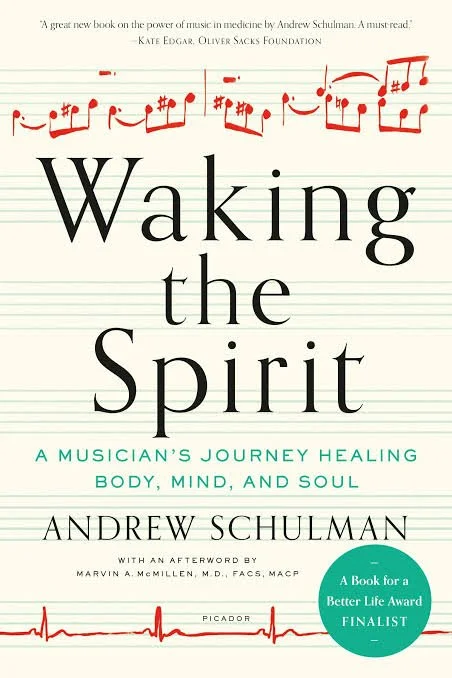
What happens when music reaches someone in a place where words, touch, and even consciousness seem out of reach? This is one of the profound questions explored in Waking the Spirit by Andrew Schulman, a classically trained guitarist whose extraordinary personal journey reveals the remarkable relationship between music, the brain, memory, and healing. As I continue developing my own practice as a therapeutic harpist, I found this book both deeply moving and full of inspiration for the work I hope to do with music.
The Story Behind Waking the Spirit
In Waking the Spirit, Andrew Schulman recounts how music became an unexpected lifeline during his own experience as a patient in a surgical intensive care unit (SICU). Following a life-threatening medical crisis, he eventually returned to that same hospital unit, this time as a musician, playing guitar at the bedsides of critically ill patients. Through these experiences, he shares remarkable stories of music reaching people who appear unresponsive, stirring memories, eliciting emotional reactions, and sometimes coinciding with meaningful changes in awareness.
Schulman weaves his personal story together with the history of music therapy and insights from researchers and experts studying the effects of music on the brain. The result is a compelling exploration of how music can affect us in ways that extend far beyond entertainment. His storytelling is especially powerful because he approaches the subject not only as a musician and bedside practitioner, but also as someone who has experienced the vulnerability of being a critically ill patient himself.
When Music Reaches Beyond Conscious Awareness
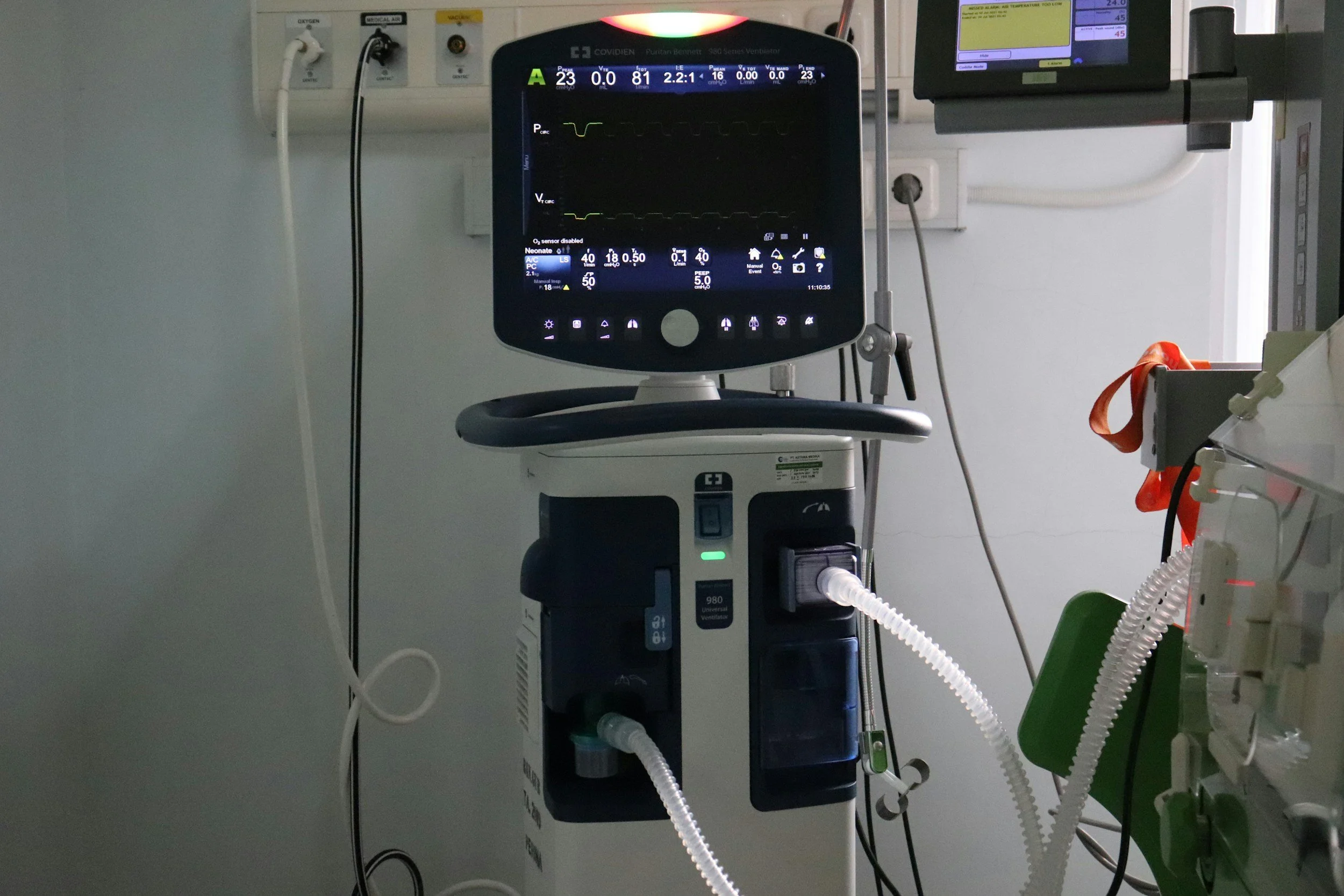
One of the most fascinating aspects of the book was Schulman's account of his experiences while in a coma. He describes how his brain seemed to organize the discordant sounds of intensive care equipment into something resembling a jazz trio. He was even able to remember and transcribe the notes of the ventilator's distinctive tune. I was captivated by the possibility that, even when someone cannot communicate or demonstrate awareness in conventional ways, the brain may still be processing sounds and making connections that are not readily apparent to those around them.
Another particularly moving moment came when Schulman described listening to Bach's St. Matthew Passion after emerging from his coma. The music brought him into contact with the emotional reality of how close he had come to death, as though his body had retained a memory of the experience that he could only begin to access afterward. This reminded me of themes explored in The Body Keeps the Score by Bessel van der Kolk, particularly the idea that traumatic experiences can leave lasting imprints on the body and nervous system, even when our conscious minds have not fully processed them. It also resonated with my own experiences of how the body can hold emotional memories that are not always immediately accessible through conscious thought.
The book also inspired me to seek out music I had never heard before. I found myself looking up pieces mentioned by Schulman, including Bach's St. Matthew Passion, as well as exploring music from earlier generations that was unfamiliar to me. I love when a book encourages me to move beyond the page and experience something for myself, especially when that exploration expands my musical repertoire and deepens my understanding of music's emotional possibilities.
The Extraordinary Connection Between Music and Memory
One of the most striking stories appears in the chapter "Better Than a Standing Ovation," in which Schulman recounts a concert given by Karl Paulnack at a nursing home. Paulnack performed music by Aaron Copland that depicted a young pilot being shot down. The piece profoundly affected a man in the audience who had served as a pilot during World War II and had witnessed a friend being shot down. The music brought that experience vividly back to him, reconnecting him with a memory that carried enormous emotional weight.
I got goosebumps reading this story. It illustrates how powerfully music can reach into our emotional lives, bringing memories to the surface with an immediacy that ordinary conversation may not achieve. A melody, a harmony, or even the sound of a particular instrument can become intertwined with a moment in our lives, and hearing it again may evoke feelings and memories that we thought were long buried. For someone interested in therapeutic music, this is both inspiring and a reminder to approach music with sensitivity, particularly when working with people who may have experienced trauma.
Schulman also shares the story of a patient he calls Alice Blue Gown, who was not demonstrating responsiveness through conventional clinical assessments. After he played music for her and asked whether she liked it, she squeezed a nurse's hand. The moment was deeply moving because it suggested a possible connection between the music and her ability to respond. Schulman discusses how music may engage multiple areas of the brain, potentially supporting attention, movement, emotional processing, and awareness in ways that other forms of stimulation may not.
These stories reinforced one of the most important lessons I took from the book: always assume someone is home. Even when a person appears unresponsive, we cannot necessarily know what they are hearing, feeling, remembering, or experiencing internally. A lack of visible response does not automatically mean a lack of awareness. I find this perspective profoundly important when considering the dignity and humanity of people who are critically ill or unable to communicate.
Music, Neuroplasticity, and Schulman's Own Recovery
Perhaps the most remarkable part of Schulman's story is the way his work eventually became part of his own recovery. After his illness, he struggled with memory. Songs he had once memorized were difficult to recall, and learning new music became frustratingly challenging. Yet he continued playing, including at the bedsides of patients in the SICU.
Over time, something extraordinary happened: he began memorizing new pieces more quickly than he had before, experiencing the music with a heightened sense of sensation and awareness. Schulman explores the possibility that continuing to engage deeply with music helped his brain adapt and reorganize itself through neuroplasticity. Rather than simply accepting the limitations caused by his injury, he continued to practice, create, and connect through music, potentially helping his brain develop new pathways and recover abilities that had once seemed lost.
I found this part of the book especially inspiring. Music was not simply something Schulman offered to others; it was also an essential part of his own ongoing relationship with recovery and healing. His story highlights the brain's remarkable capacity for change and adaptation, while illustrating how meaningful activities can become an important part of a person's rehabilitation journey. Although one person's experience cannot establish that music will produce the same results for everyone, his story offers a compelling example of the possibilities worth exploring.
Applying These Lessons to My Therapeutic Harp Practice
As I continue my journey as a therapeutic harpist, this book has given me a wealth of ideas and inspiration for music I would like to learn and explore in clinical and bedside settings. One insight that particularly stood out to me was Schulman's observation that many of the pieces he found effective with patients in the ICU were instrumental arrangements of vocal music. This has encouraged me to continue learning arrangements of familiar popular songs and choral music, recognizing that recognizable melodies may carry emotional associations that make them meaningful to listeners.
I also want to remember Schulman's advice to assume that someone may still be listening, even when they cannot demonstrate their awareness in a way that others can easily recognize. This perspective encourages me to approach each patient with respect, patience, and an openness to the possibility that music may be reaching them in ways I cannot observe. Rather than measuring the value of a musical encounter solely by the response I can see, I can focus on offering thoughtful, attentive music and remaining present with the person in front of me.
Finally, the book inspired me to consider creating a musical playlist for an advance directive. Many people thoughtfully document their wishes for medical care, but music can be deeply personal, too. A playlist of meaningful songs could offer family members and caregivers a way to share something familiar and comforting during serious illness or at the end of life. I love the idea of encouraging people to identify the music they would want to hear when they may not be able to communicate their preferences themselves.
Final Reflections
I thoroughly enjoyed Waking the Spirit. Andrew Schulman is a wonderful storyteller, and his experiences bring together music, medicine, memory, and human connection in a way that is both moving and thought-provoking. I was especially struck by the intricate connections that came full circle throughout his story, including his encounter with the tenor soloist associated with Leonard Bernstein's production of the St. Matthew Passion. Those moments made the book feel like more than a story about recovery; they revealed how music can connect people across time, circumstance, and seemingly improbable circumstances.
More than anything, this book reminded me why I am drawn to therapeutic music. Music does not require us to explain ourselves, find the right words, or demonstrate that we are responding in a particular way. It can offer connection when communication is difficult, evoke memories when we least expect them, and create a moment of beauty in an otherwise overwhelming environment. Although music is not a cure-all, its potential to support comfort, connection, and quality of life deserves our attention.
As I continue developing my therapeutic harp practice through Lightkeeper's Way, I am carrying these lessons with me. I want to keep expanding my repertoire, learning about the science behind music and the brain, and approaching each musical encounter with curiosity and compassion. Waking the Spirit has reminded me that sometimes the most meaningful thing we can offer another person is simply our presence, a carefully chosen melody, and the willingness to believe that even when we cannot see or hear a response, the music may still matter.
